Garden Gnomes: How to Choose the Right Style, Material, and Placement
10 min read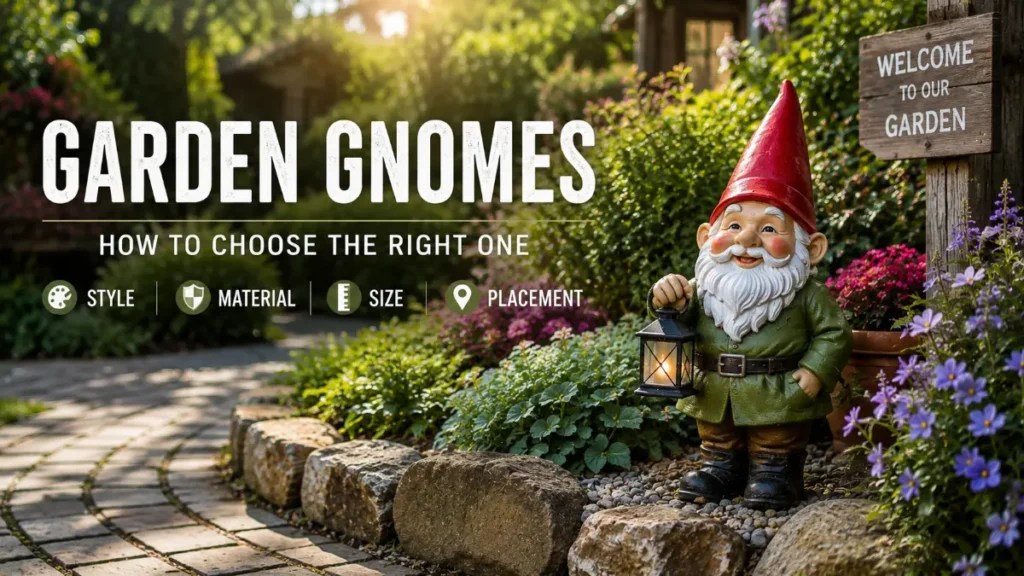
Garden gnomes work best when they look like part of the garden rather than objects dropped into a space. The right figure can add personality to a flower border, create a focal point beside a path, or give a small patio a playful detail. The wrong size, material, or location can make even a good-quality ornament look disconnected.
Choosing well, therefore, involves more than picking the character you like most. You need to consider the garden’s style, the figure’s material, local weather, available space, viewing angles, maintenance, and how much visual attention you want the ornament to attract.
This guide focuses on those decisions. It explains how to choose garden gnomes for different outdoor settings, compare common materials, judge scale, avoid clutter, and build a display that still looks intentional after the novelty wears off.
Start With the Garden, Not the Ornament
Before buying anything, identify the job the figure needs to perform.
A small ornament might be intended to:
- welcome visitors near an entrance;
- add interest to an otherwise quiet planting bed;
- create a humorous focal point;
- complement a pond, rockery, or container;
- introduce color to a restrained garden;
- become part of a miniature scene; or
- provide a collectible or traditional character.
That decision immediately narrows your choices.
A large brightly painted figure may work beautifully in an informal family garden but overpower a compact balcony. A weathered stone figure may disappear in dense planting but look excellent against gravel. A traditional terracotta character may suit a cottage-style border better than a novelty design.
The strongest choice is usually the one that reinforces something already present in the garden.
Match the Style to the Landscape
Garden style does not need to dictate the ornament completely, but it should influence the direction you take.
| Garden setting | Suitable gnome direction | Why it works |
| Cottage garden | Traditional painted or weathered figure | Reinforces an informal, storybook character |
| Rustic garden | Wood or aged-looking figure | Connects with natural textures |
| Woodland garden | Stone, muted ceramic, or restrained traditional figure | Works with rocks, shade, and natural materials |
| Modern garden | Simple silhouette or muted finish | Avoids competing with clean lines |
| Gravel garden | Stone or concrete figure | Relates to hardscape and mineral textures |
| Family garden | Traditional or novelty character | Allows humor and personality |
| Balcony/container garden | Small lightweight figure | Keeps scale under control |
| Formal garden | One restrained accent | Creates contrast without overwhelming symmetry |
Cottage Gardens
A traditional figure with a simple painted finish often feels natural among informal planting.
The surrounding plants do much of the visual work. A figure partly hidden by foliage can look more integrated than one placed directly on bare soil.
Modern and Minimalist Gardens
Minimalism requires restraint rather than the complete absence of personality.
If the garden has geometric paving, limited colors, and strong architectural lines, consider a single figure with a quiet finish. Natural stone, concrete, or a simple contemporary interpretation can work better than several brightly colored characters.
The contrast can actually make the ornament more noticeable-but because there is only one strong accent, it remains deliberate.
Rustic and Woodland Gardens
Natural textures provide an easy backdrop for decorative figures.
Stone, weathered ceramic, and wood can connect visually with bark, rocks, gravel, timber, and woodland planting. In these settings, a subdued finish often feels more integrated than a glossy surface.
Which Material Should You Choose?
Material affects appearance, weight, durability, maintenance, and how the figure behaves outdoors.
There is no universally best material because the right choice depends on climate and construction quality.
| Material | Advantages | Main concerns | Good use |
| Terracotta | Traditional appearance; authentic ceramic character | Porous; freezing moisture can cause damage | Sheltered or suitable climates |
| Resin | Lightweight; detailed shapes; easy to move | Quality and UV resistance vary | Flexible general use |
| Concrete | Heavy; stable; substantial appearance | Difficult to relocate | Permanent focal points |
| Natural stone | Durable; naturally weathered look | Heavy; can be costly | Long-term landscape features |
| Ceramic/porcelain | Detailed surfaces; vivid finishes | Fragile compared with heavier outdoor materials | Protected locations |
| Wood | Warm and handmade appearance | Requires protection from moisture and decay | Rustic settings |
Terracotta
Terracotta has an important historical connection with the traditional German garden-gnome industry. But historical authenticity does not automatically make it the best material for every climate.
Because fired clay can be porous, repeated freezing and thawing can be problematic when moisture enters the material. A traditional terracotta figure therefore deserves more protection in a climate with hard winter freezes.
Check the manufacturer’s care instructions rather than assuming every clay figure can remain outside year-round.
Resin
Resin is attractive for people who want a lightweight ornament.
It is easier to move than concrete and can reproduce detailed faces, clothing, and poses. But “resin” describes a broad category of products rather than one guaranteed durability level.
Look for outdoor suitability, UV resistance, construction quality, and drainage where relevant. A thin decorative product should not be treated as equivalent to a heavily constructed outdoor sculpture.
Concrete and Stone
Weight is the major advantage.
A substantial figure is less likely to move in strong wind and can serve as a permanent focal point. The disadvantage is equally obvious: once it is installed, moving it can become difficult.
Place heavy ornaments on stable, level ground and consider access before installation.
Ceramic and Porcelain
These materials can deliver fine detail and attractive finishes, but fragility makes location especially important.
A protected porch, covered patio, or sheltered garden corner may be more appropriate than a position where the figure is likely to be knocked over.
Wood
Wood introduces a warmer, more handmade character.
Its lifespan depends heavily on species, construction, finish, and exposure. Inspect wooden ornaments periodically and follow the manufacturer’s recommendations for sealing or refinishing.
How to Choose the Right Size
Scale is one of the easiest things to get wrong.
A figure that looks charming on a shop shelf can disappear beside a large shrub or dominate a small container garden.
Instead of using one universal measurement, compare the ornament with the things around it.
Ask:
- Can I still see the figure from the main viewing point?
- Does it compete with a doorway, sculpture, tree, or large plant?
- Is its base stable?
- Does it look proportional to the planting?
- Will it remain visible as plants mature?
A useful principle is to judge the visual footprint, not just the figure’s height.
A small figure among low plants can have plenty of presence. The same figure may vanish beneath mature foliage. Conversely, an oversized character can become the garden’s main subject even when that was never the intention.
Where Should Garden Gnomes Be Placed?
The best location usually has some relationship with an existing feature.
Good possibilities include:
- the edge of a flower border;
- beside a path;
- near a gate;
- beneath an appropriate shrub;
- beside a rockery;
- near a pond;
- at the edge of a container grouping;
- beside a garden bench; or
- in a dedicated miniature scene.
The key is context.
Avoid the Empty-Lawn Trap
Putting a tiny figure in the center of a large lawn often makes it look stranded.
If an open lawn is the only option, create a surrounding feature-such as a planting island, bed, stone grouping, or container arrangement-rather than treating the grass as the entire backdrop.
Use Partial Concealment
A figure does not need to be completely visible.
Positioning it partly behind foliage can create depth and make the ornament feel discovered. This is particularly effective with traditional figures because their recognizable hat and face can remain visible while the body becomes part of the planting.
Consider the Viewing Direction
Think about where people actually stand.
A figure facing a path can feel welcoming. One looking toward a pond can reinforce a scene. A side-facing pose may look more natural than one positioned directly toward every visitor.
There is no requirement that a figure face the camera-or even the house.
Should You Use One Gnome or Several?
There is no scientifically established ideal number.
One figure may be enough for a small garden. A larger informal landscape can support several separate displays.
The mistake is usually not quantity itself. It is uncontrolled distribution.
If you have several figures, give them distinct visual homes instead of spreading them randomly across every available bed.
For example:
- one near the entrance;
- one in a flower border; and
- one beside a pond.
That creates three separate moments rather than one continuous collection.
If you want a village-style display, contain the collection within a clearly defined area.
How to Create a More Refined Display
If you like the personality of traditional garden gnomes but want to avoid an overly busy appearance, use three controls: material, repetition, and negative space.
Control the Material
Choose finishes that relate to the surroundings.
A stone figure beside stone paving feels connected. A painted figure beside colorful cottage planting can become a deliberate accent.
Repeat One Visual Element
If several figures are used, repeat something.
It might be:
- the same color family;
- similar materials;
- a consistent scale;
- a shared theme; or
- a common planting backdrop.
Repetition makes a collection feel designed rather than accidental.
Leave Empty Space
An ornament becomes easier to appreciate when it has room around it.
Do not fill every gap simply because space is available. Plants, paths, walls, and open ground can all provide visual breathing room.
Practical Placement by Garden Type
| Garden situation | Best starting approach | Main consideration |
| Small patio | One small figure near a container | Avoid overcrowding |
| Front garden | Entry or border accent | Keep access clear |
| Large lawn | Create a planted setting first | Prevent the figure from looking isolated |
| Vegetable garden | Edge of a bed | Keep clear of cultivation |
| Pond | Themed figure near, not on, the edge | Stability and maintenance access |
| Rockery | Weathered or traditional figure | Integrate with stone |
| Formal garden | Single restrained accent | Preserve symmetry |
| Family garden | Character or novelty figure | Keep accessories safe |
Seasonal Use Without Constant Replacement
You do not need to buy a new ornament for every season.
Keep one durable figure and change the surrounding context.
Spring can introduce flowering bulbs. Summer can rely on foliage. Autumn can bring pumpkins or warm-toned planting. Winter can use evergreen branches or suitable outdoor lighting.
This approach is cheaper, creates less clutter, and allows the same figure to become part of the garden’s identity.
Avoid attaching accessories that could damage the finish, become loose in wind, or create a hazard.
Maintenance Matters More Than Most Buyers Expect
An ornament can remain attractive for years if its care matches its material.
Check periodically for:
- cracks;
- peeling paint;
- fading;
- trapped water;
- corrosion on metal components;
- unstable bases;
- biological growth; and
- damage caused by frost or impact.
Clean gently according to the material. Avoid aggressive cleaning methods that can remove paint or surface finishes.
If the manufacturer recommends winter storage, follow that instruction even if another material might normally tolerate outdoor conditions.
Read more: Garden gnomes work best when they look like…….
A Better Buying Checklist
Before purchasing, answer these questions:
Where will it live?
Choose the location first.
What weather will it face?
Think about sun, rain, wind, humidity, and freezing temperatures.
How much attention should it attract?
A focal point should be intentional.
Will the plants grow around it?
Allow for mature size rather than designing around today’s planting height.
Can I move it safely?
This matters particularly for concrete and stone.
Does it actually add something?
If the garden already has several focal points, another ornament may make the composition weaker.
That last question is the most important. Buying less can sometimes produce a better garden.
Frequently Asked Questions
Are garden gnomes suitable for modern gardens?
Yes. A single restrained figure can work particularly well when its material, color, and scale relate to the surrounding architecture. Muted stone, concrete, or simple finishes generally create a quieter effect than multiple brightly painted figures.
What is the most durable material for outdoor use?
Concrete and natural stone can provide excellent durability and stability, but durability also depends on construction, climate, installation, and maintenance. A well-made outdoor resin figure may be more practical when portability matters.
Can terracotta garden gnomes stay outside during winter?
That depends on the product and climate. Porous fired clay can be vulnerable to damage from moisture and freezing conditions. In areas with repeated hard freezes, follow the manufacturer’s winter-care instructions rather than assuming the figure is frost-proof.
Where is the best place for a first gnome?
A flower-bed edge, entryway, or sheltered path-side location is usually easier to integrate than an isolated position in the middle of a lawn.
How many figures should I have?
There is no fixed number. Start with one focal point and add another only when it improves a different part of the garden.
Do garden gnomes look good in flower beds?
They can. Partially surrounding a figure with foliage often makes it feel more integrated than placing it on bare soil.
Can a gnome be used in a vegetable garden?
Yes, provided it is positioned at the edge and does not interfere with cultivation. Keep decorative coatings and unsuitable materials away from direct contact with edible crops.
How can I stop painted figures from fading?
Limit prolonged exposure where practical, follow product-care instructions, and choose finishes designed for outdoor use. Fading resistance varies substantially between products.
Should heavy garden gnomes be secured?
A heavy stone or concrete ornament may not require anchoring in every location, but stability should always be considered. Sloping ground, strong winds, foot traffic, and vulnerable placement can change the risk.
Are novelty gnomes suitable for formal gardens?
They can be, but contrast should be deliberate. One humorous figure can create a controlled visual interruption; several unrelated novelty pieces are more likely to compete with a formal garden’s structure.
Final Takeaway
Choosing garden gnomes well is less about following a trend and more about understanding proportion, context, material, and maintenance.
Start with the garden you already have. Select a figure that supports its character, choose a material appropriate to the environment, and place it where plants or hardscape give it a reason to belong.
The best ornament is not necessarily the most expensive, largest, or most elaborate. It is the one that looks intentional from the places where you actually experience the garden.