








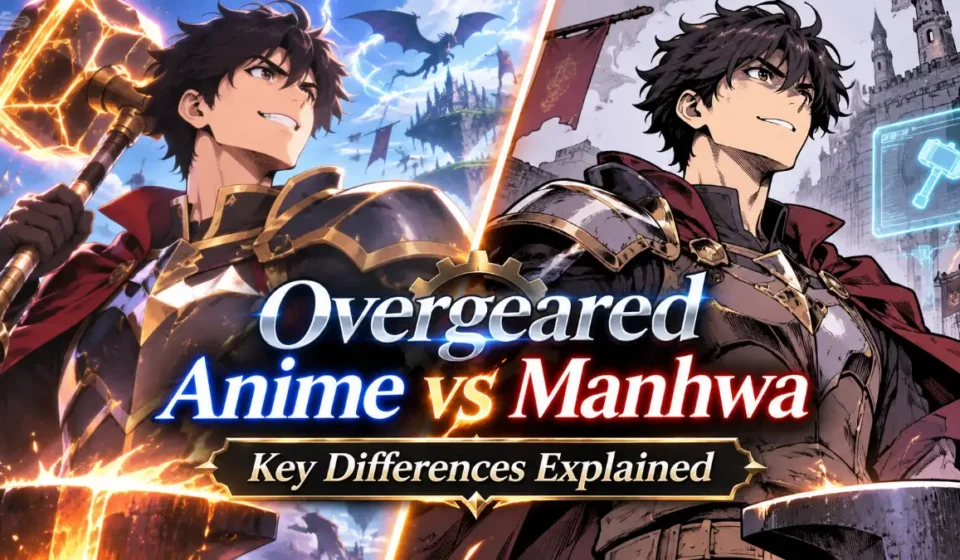

The biggest Overgeared anime vs manhwa differences involve character names, Japanese localization, pacing, and visual storytelling. The 2026 anime, produced by J.C.STAFF, follows the central storyline established in Saenal’s original Korean web novel and its manhwa adaptation by Monohumbug and Team Argo. However, the Japanese version uses Takumi Nagamine as Grid’s real-world name, while the original Korean and English manhwa identify him as Shin Youngwoo. The anime retains his legendary blacksmith storyline but presents it through animation, voice acting, and episodic storytelling.
The original manhwa follows a financially struggling young man whose fortunes change after discovering Pagma’s legendary blacksmith knowledge in the virtual reality game Satisfy. The anime preserves this premise, including Grid’s class transformation and level reset, while adapting the adventure for television.
The anime began streaming on September 27, 2026, ahead of its October 2 Japanese television premiere. Crunchyroll carries the series in the United States and other supported regions with Japanese audio and an English dub. The confirmed differences are worth exploring, although claims about deleted scenes or rewritten story arcs require direct comparisons with the original comic.
Biggest Differences Between the Overgeared Anime and Manhwa
The Overgeared anime vs. webtoon comparison goes beyond animated scenes replacing illustrated panels. Japanese localization changes how certain real-world characters are identified, while the two formats create different experiences of Grid’s journey.
| Feature | 2026 Anime | Original Korean/English Manhwa |
| Protagonist’s real name | Takumi Nagamine in Japanese localization | Shin Youngwoo (Youngwoo Shin) |
| In-game identity | Grid | Grid |
| Real-world character names | Some Japanese-localized names | Original Korean identities |
| Main storyline | Grid becomes Pagma’s successor | Same foundational storyline |
| Artwork | Animated movement and action | Full-color illustrated panels |
| Storytelling | Episodes, music, and voice acting | Dialogue, narration, and illustrations |
| Character development | Revealed through released episodes | More of Grid’s journey available |
| Pacing | Fixed television episodes | Reader-controlled scrolling |
| Overall experience | Audiovisual fantasy adventure | Self-paced illustrated storytelling |
One important distinction is that the Japanese naming was not introduced exclusively for the anime. The Japanese-language comic edition also uses Takumi Nagamine, while the original Korean and English editions retain Youngwoo’s Korean identity.
Grid’s Character, Name and Real-World Setting
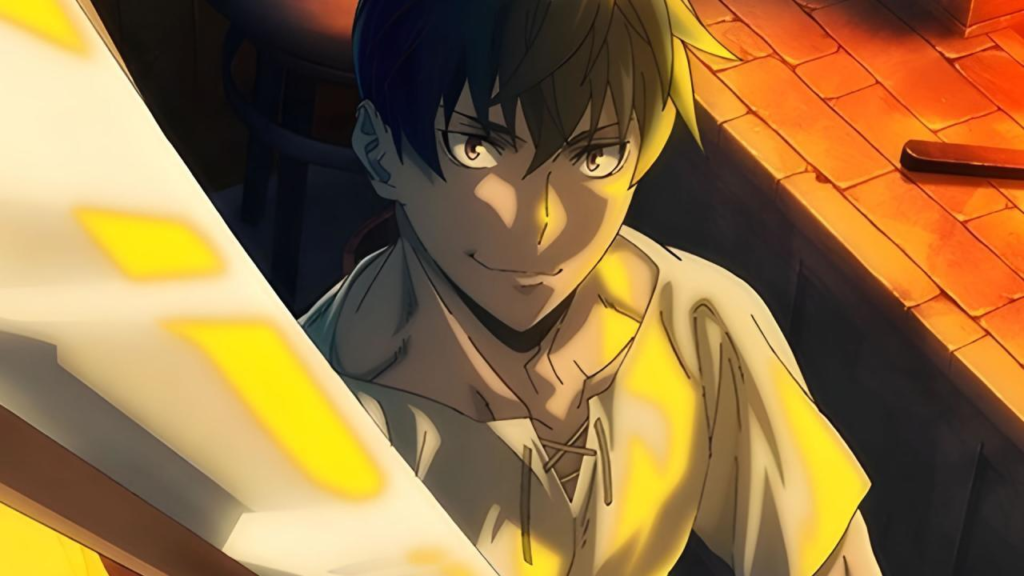
Shin Youngwoo vs. Takumi Nagamine
In the original Korean manhwa, Grid’s real name is Shin Youngwoo, written Youngwoo Shin in the official English edition. He is an unsuccessful young man struggling with debt and hoping that Satisfy will help him improve his circumstances.
The Japanese version identifies the same protagonist as Nagamine Takumi, or Takumi Nagamine in English name order. This is a localization difference, not a separate character or an alternate storyline.
The distinction is confirmed by the publishers themselves. Yen Press identifies the protagonist as Youngwoo Shin in its English release, while SB Creative’s Japanese comic edition identifies him as Nagamine Takumi.
Interestingly, Crunchyroll’s English-language promotional coverage still refers to the anime protagonist as Youngwoo Shin. This explains why viewers may encounter different names depending on the language, edition, or promotional material.
Inside Satisfy, however, his identity remains Grid.
Has Grid’s Personality or Background Changed?
Grid’s defining circumstances remain recognizable in the anime. He struggles financially, faces disappointment in his personal life, and hopes his gaming success will eventually change his situation.
His discovery of Pagma’s legendary knowledge gives him an unusual opportunity, but becoming a legendary blacksmith’s successor does not immediately solve his problems. The class transformation resets his levels, forcing him to rebuild his strength.
Grid’s frustration, greed, persistence, and occasional selfishness are important parts of his characterization. These qualities help distinguish him from more conventional fantasy protagonists who begin their adventures with heroic intentions.
The anime presents those traits through facial expressions, dialogue delivery, and voice performances. The manhwa gives readers more control over how long they spend with his reactions and internal struggles.
These presentation differences can affect how Grid comes across, but they do not establish that his fundamental personality or motivation has been rewritten.
Supporting Characters and Japanese Localization
Grid is not the only character associated with Japanese-localized naming.
Crunchyroll’s official English-dub cast announcement includes Takumi’s parents alongside characters identified as Seira, Sakaeda, Yazaki, and Futaba.
However, familiar names such as Yura, Irene, Doran, and Grid also appear in the anime’s cast information.
This creates a distinction between localized real-world identities and names retained from the fantasy game setting. Not every character has been renamed, and the published cast information alone does not establish a complete conversion of the story’s Korean locations into Japanese ones.
For readers familiar with the original manhwa, the most noticeable confirmed changes concern character identification rather than Grid’s role within Satisfy.
Storyline, Pacing and Scene Changes
Does the Anime Follow the Original Story?
Yes. The Overgeared anime follows the original story’s central premise.
Grid begins as an unsuccessful player in Satisfy, a virtual reality game where he has invested considerable time without achieving the results he wants. His discovery of a legendary book associated with Pagma changes everything.
After using it, he inherits a legendary blacksmith class but loses his accumulated levels. This creates the central challenge of his early journey: developing extraordinary crafting abilities while overcoming the consequences of starting over.
The anime retains that turning point, which also appears in the official Overgeared anime announcement.
The first episode, Legendary Class, establishes Grid’s transformation. Episode two, First Step Towards Being a Blacksmith, continues with the consequences of acquiring his new class.
These early events demonstrate that the anime follows the manhwa’s foundational narrative rather than replacing it with an unrelated story.
Which Scenes or Details Have Changed?
The clearest early difference concerns how quickly the story unfolds.
The anime introduces Grid’s difficulties, his experience inside Satisfy, and his discovery of the legendary class within its opening episode. The manhwa presents these events through sequential illustrations, dialogue, and game-system information that readers can examine at their own pace.
That difference affects how the introductory material feels. In the anime, Grid’s class transformation forms a major early episode moment. In the comic, readers can spend more time examining the circumstances surrounding his discovery and the consequences shown in individual panels.
The adaptation also changes how action and dialogue are presented. Battles unfold through movement, sound effects, and music, while conversations depend on voice performances and scene timing rather than speech bubbles.
These are observable differences between the formats, but they should not be confused with confirmed plot omissions.
As of November 13, 2026, seven episodes have been released, with episode seven titled Pagma’s Sword Dance. A reliable, complete episode-to-manhwa chapter comparison has not been established here.
Consequently, claims that particular character arcs, important conversations, or entire chapters have been removed would go beyond the confirmed evidence. Later episodes may also provide additional context for scenes introduced earlier.
Anime Animation vs. Manhwa Artwork
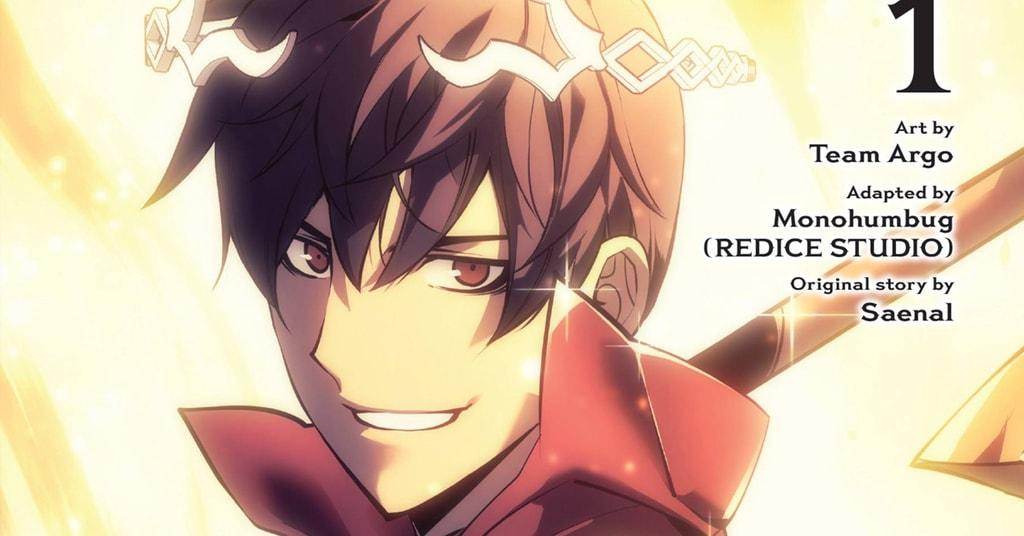
The manhwa’s full-color artwork gives Overgeared a distinctive appearance. Character expressions, equipment designs, and carefully arranged action panels help communicate both the fantasy adventure and Grid’s frequently frustrated reactions.
Its vertical-scrolling format also allows readers to control dramatic reveals. They can pause to examine armor, revisit important dialogue, or read game notifications without interrupting the experience.
The anime offers different strengths. Combat scenes become continuous sequences, characters speak aloud, and music adds atmosphere to major events.
J.C.STAFF’s adaptation is directed by Ayako Kono, with character designs by Ryosuke Tanigawa and music by Yoshiaki Fujisawa. Those production choices give the television version its own rhythm and presentation.
Neither format is automatically superior. Readers who enjoy examining detailed illustrations may prefer the manhwa, while viewers interested in animated action and voice performances may find the anime more engaging.
Is the Overgeared Anime Faithful to the Manhwa?
The anime is faithful to the original story’s central premise, although its Japanese-localized presentation differs from the Korean and English manhwa editions.
Grid remains the same struggling player whose discovery of Pagma’s legacy creates both opportunities and problems. His progress in Satisfy, the importance of equipment, and the challenges of his legendary blacksmith class continue to drive the story.
The differences are most evident in localized character identities and the presentation of events. Japanese naming is not exclusive to the anime, since the Japanese comic edition uses that localization as well.
Pacing also changes when illustrated chapters become television episodes. However, shorter scenes or faster introductions do not automatically mean important character development has been eliminated.
A complete judgment of adaptation accuracy requires more of the story to be adapted and compared directly with the source. The anime is still airing, making it premature to declare that later relationships or major story arcs have been fundamentally changed.
Fans interested in other Korean webtoon adaptations can also explore the latest Solo Leveling Season 3 updates, although the two series have different stories and adaptation approaches.
Overgeared Anime or Manhwa: Which Should You Choose?
The better choice depends on what you enjoy most about Grid’s adventure.
Choose the anime if you prefer animated battles, voice acting, music, and a guided introduction to Satisfy. It offers an accessible way to experience Grid’s early progression without reading through the comic.
Choose the manhwa if you want the original Korean character identities, Team Argo’s illustrations, and greater control over the pacing. It also allows readers to continue further into Grid’s journey without waiting for each new television episode.
The original web novel by Saenal is another option for anyone interested in exploring the source narrative beyond its illustrated and animated adaptations.
Ultimately, the anime preserves the premise that makes Overgeared recognizable, while the manhwa offers the original Korean comic experience. Watching the anime and reading the manhwa can be complementary rather than competing ways to follow Grid’s story.
Frequently Asked Questions
Is Takumi Nagamine the same character as Shin Youngwoo in Overgeared?
Yes. Takumi Nagamine and Shin Youngwoo are the same protagonist. Shin Youngwoo is his name in the original Korean and English manhwa, while Takumi Nagamine is used in the Japanese-localized versions. His in-game name, Grid, remains unchanged.
Does the Overgeared anime skip chapters from the manhwa?
The anime condenses parts of the early story to fit its television format. However, specific skipped chapters or major omitted scenes have not been reliably confirmed through a complete episode-by-chapter comparison. The anime retains the original story’s central events.
Should I read the Overgeared manhwa before watching the anime?
No. You can watch the anime without reading the manhwa because it introduces Grid, Satisfy, and his legendary blacksmith class from the beginning. However, reading the manhwa provides the original Korean character identities, detailed artwork, and more of the story beyond the released anime episodes.

